


7 SEO Strategies for Local Businesses

Unlock the power of local SEO to elevate your business presence in a marketplace where customer attention is harder to capture than ever. Many local businesses struggle with visibility, often buried beneath national competitors and shifting search behaviors. When potential customers cannot easily find your services, even the strongest offerings can go unnoticed.
This guide breaks through that challenge by outlining seven advanced strategies designed to sharpen your visibility, attract high intent local traffic, and convert more customers within your community. Each tactic is crafted to match the realities of 2025’s search landscape, where precision, relevance, and trust determine who wins.
Developed by industry experts with a proven track record of driving measurable SEO success, this resource gives you the clarity and direction needed to compete effectively and grow with confidence.
Optimize Your Google My Business Profile
A well optimized Google My Business profile is often the deciding factor in whether a customer discovers your company or passes you by. If you want practical, high impact local business SEO tips that actually drive foot traffic, your Google listing is the first place to start. Many local searches end in a same day visit, which is why having accurate information, fresh updates, and relevant keywords can dramatically influence how often you appear in the map pack. Insights from official Google Business guidance emphasize that complete and regularly maintained profiles consistently perform better in local search.

Claim and Verify Your Listing
Claiming your listing sounds simple, but it is easily the most important step in learning how to do local SEO with intention. Without verification, you cannot correct outdated details or access analytics. Google outlines the process for ownership verification and brand accuracy in its step by step support documentation, making it easier to ensure your listing is secure and fully controlled by your team.
Once verified, prioritize the elements customers rely on most:
- Accurate business categories
- A keyword rich description aligned with your services
- High quality photos that reflect current branding
- Consistent operating hours, including holiday updates
Tip: Listings with regular photo updates often experience stronger engagement signals, which can indirectly support higher visibility in local map results.
Use the table below to guide consistent optimization:
| Optimization Element | Why It Matters | Recommended Frequency |
|---|---|---|
| Business info accuracy | Ensures trust and reduces bounce risk | Monthly review |
| Photo updates | Improves engagement and click through | Weekly or biweekly |
| Review responses | Builds credibility and local relevance | Daily or weekly |
Leverage Local Keywords
Local keywords are the backbone of any strong local SEO checklist because they anchor your business to the exact neighborhoods, cities, and service areas your customers search from. When people type phrases like near me or ask how to do local SEO for a specific town, they expect results that feel truly local. That means your keyword strategy must go beyond generic industry phrases and reflect the real language your community uses.
To make your content hyper relevant, start by listening closely to the intent behind local searches. Customers rarely just search for a service. They search for a solution tied to where they live, work, or shop.
Use Location-Based Keywords
Location-based keywords help search engines understand exactly where your business operates. When done correctly, they boost your visibility for high intent searches such as plumber in Midtown Atlanta or best vegan bakery Houston Heights.
Here are smart ways to incorporate them:
- Add city, neighborhood, and landmark terms to your core keywords.
- Create service area pages targeting specific zip codes or local districts.
- Use locally relevant modifiers such as near courthouse, riverfront, or historic district.
- Include conversational variations that mimic how real locals describe your area.
Prioritize the exact wording your customers use in conversations, reviews, and community forums. Authentic phrasing strengthens relevance and trust.
Build Local Citations Strategically
Strong local citations act as the quiet infrastructure behind your visibility, reinforcing trust signals that search engines use to evaluate real-world legitimacy. When you follow reliable local business SEO tips, citations become more than directory listings - they function as amplifiers for brand authority and consistency. Part of any thorough local SEO checklist is ensuring your business information appears accurately across platforms your customers already rely on.

Identify High-Value Citation Sources
Not all citations carry the same weight. The most effective approach is prioritizing platforms that search engines associate with credibility and verified data. Reliable sources typically fall into a few categories:
- Government or municipal directories
- Chambers of commerce or industry associations
- Recognized map providers and navigation ecosystems
- Niche platforms that attract customers within specific industries
A helpful way to evaluate your top opportunities is to compare platforms by credibility, relevance, and customer visibility:
| Citation Source Type | Why It Matters | Ideal Use Case |
|---|---|---|
| Government directories | High trust, high authority | Businesses needing strong verification signals |
| Local associations | Community relevance | Service providers and brick-and-mortar shops |
| Niche industry platforms | Audience targeting | Specialized or regulated industries |
| Major map providers | User discovery | Any business seeking more foot traffic |
Consistency is everything. Your NAP data (name, address, phone) must match across every listing to avoid confusing search engines and weakening your ranking signals.
By approaching citations with intentionality, you build a reliable digital footprint that strengthens your local authority and supports long-term visibility.
Engage in Local Link Building
Local backlinks do more than strengthen authority - they signal to search engines that your business is genuinely rooted in the community. When you weave these links naturally into your broader local business SEO tips strategy, you build credibility that competitors cannot easily replicate. Local link building is ultimately about relationships, shared value, and becoming a visible contributor to the regional ecosystem.
A smart starting point is to understand how search engines evaluate credibility. Insights from Google’s own guidance on search best practices make it clear that high quality, relevant backlinks remain a core trust indicator. Pair that with foundational principles from search engine optimization fundamentals, and you can begin building a roadmap that blends technical precision with authentic community engagement.
Create Locally Relevant Content
Locally focused content is often the magnet that attracts natural backlinks. Instead of generic posts, craft stories, guides, or data that resonate with your city, community events, or neighborhood issues. The more specific your insights, the more link worthy your content becomes.
Consider creating:
- Deep dive profiles on local businesses or organizations
- Guides to seasonal events, local regulations, or community resources
- Data driven pieces that highlight local trends or challenges
Here is a simple breakdown of content types and the link opportunities they typically generate:
| Content Type | Ideal Local Backlink Sources | Why It Works |
|---|---|---|
| Local event guides | Community blogs, city calendars, nonprofits | High relevance and community value |
| Business spotlight articles | Chambers of commerce, local business directories | Encourages mutual linking and visibility |
| Local data reports | News outlets, municipal partners | Data driven content attracts authority links |
Focus on topics only a business embedded in the community could authentically cover. This is what turns content into a local SEO asset rather than just another blog post.
Utilize Online Reviews
Online reviews have become a core signal in how to do local SEO effectively, especially as search engines continue refining how they evaluate trust and relevance in local search results. When a business consistently earns authentic, high quality feedback, it sends a strong credibility signal to both search engines and potential customers. Insights from official Google guidance on business visibility emphasize that recent, relevant reviews help improve how well a local listing performs in local search.
Reviews are not just digital compliments. They are conversion assets that influence click behavior, increase time on page, and boost consumer trust. For businesses aiming to strengthen their local footprint, reviews act as a near real time barometer of customer satisfaction and operational consistency. Additional context from materials explaining how search evaluates trust signals highlights how user generated content can help search engines understand experience quality.
Encourage and Manage Reviews
A structured approach to review management can significantly amplify your local business SEO tips strategy.
- Ask for feedback shortly after a positive interaction.
- Make the review process effortless by sharing direct links.
- Respond promptly to both praise and criticism.
- Track recurring themes to uncover operational improvements.
Responding thoughtfully to reviews shows that your business values customer experience, which can increase engagement and attract more high intent local searchers.
| Objective | Review Action | SEO Impact |
|---|---|---|
| Improve visibility | Request consistent feedback | Steady flow of new content signals relevance |
| Build trust | Respond to concerns | Demonstrates active engagement |
| Attract new customers | Highlight positive trends | Strengthens decision making for searchers |
By nurturing an ongoing review strategy, you enhance your credibility and give search engines meaningful signals to reward in local rankings.
Optimize Website for Local Search
Fine tuning your website for local visibility is the backbone of any local SEO checklist, especially when competing against businesses just a few blocks away. Local search success relies on how well your site communicates essential details like location, services, and relevance to nearby customers.
One of the fastest ways to strengthen this foundation is by tightening on page elements that signal local intent. This includes optimizing title tags with city based modifiers, creating location driven landing pages, and ensuring your NAP details stay consistent sitewide.
Implement Local Schema Markup
Search engines rely heavily on structured data to understand who you are and where you operate. Adding local business schema clarifies these details and can increase your chances of earning rich results. According to insights from Google’s structured data documentation, accurate markup helps search engines interpret essential business information more reliably. You can also reference the standards published on Schema.org guidelines to ensure your tags match current best practices.
A focused implementation typically includes:
- LocalBusiness schema with address, phone, and hours
- GeoCoordinates for enhanced mapping accuracy
- SameAs links to confirm external profiles
Tip: Keep your schema markup updated whenever business details change to avoid inconsistencies that could harm local rankings.
Use this framework as part of your ongoing optimization process to maintain strong, location specific visibility.
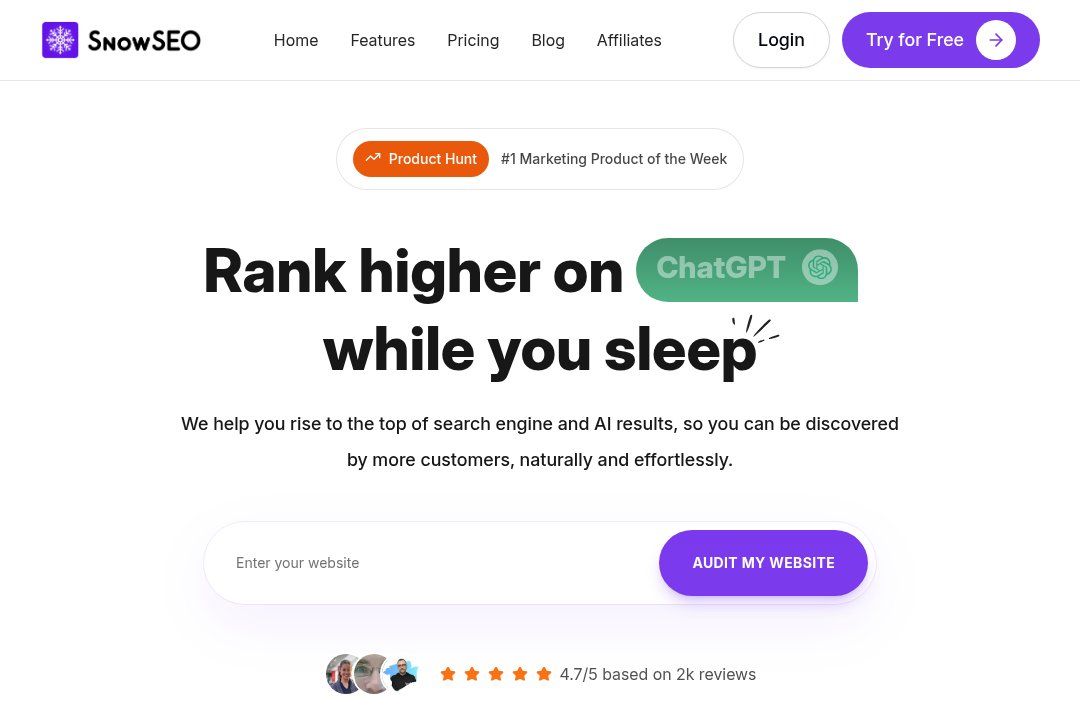
If you are ready to turn these 7 local SEO strategies into real growth, this is the moment to take action. Local search keeps getting more competitive, and the businesses that win are the ones that optimize consistently, track performance intelligently, and adapt faster than their competitors. That is exactly where SnowSEO can help. With its automated keyword research, AI powered content creation, and continuous performance monitoring, SnowSEO gives local businesses a practical way to implement every strategy in this article without the usual complexity. Whether you want stronger map rankings, better on page optimization, or a sharper understanding of your competitors, the platform streamlines all of it so you can focus on serving customers. Start exploring how it fits your growth goals today, and learn more strategies by subscribing to our newsletter.
Frequently Asked Questions
Q1: What makes local SEO different from traditional SEO?
Local SEO focuses on helping a business appear in searches tied to a specific geographic area. Instead of competing with national brands, you are optimizing for people who are physically near your location and ready to act. This means strategies like Google Business Profile optimization, local citations, and proximity-based keywords matter far more. Traditional SEO leans heavily on broad keyword visibility, while local SEO is all about showing up at the exact moment a nearby customer needs what you offer.
Q2: How long does it take for local SEO strategies to show results?
Most local businesses start seeing early traction within 6 to 12 weeks, especially if their Google Business Profile and local citations are fully optimized. Competitive industries or areas with dense business clusters may take longer. What really accelerates results is consistency. When you continuously update your listing, build reviews, refine landing pages, and maintain NAP accuracy, search engines begin trusting your business faster, which can significantly shorten your ranking timeline.
Q3: Do small businesses really need local SEO if they already get referrals?
Referrals are valuable, but relying on them alone puts your growth at risk. Consumers today cross check nearly everything online, even when a friend recommends a business. If your company does not appear prominently in local search results, customers may choose a competitor who looks more credible or visible. Local SEO ensures your business is discoverable, trustworthy, and present in those key micro moments when people search with strong buying intent.
Q4: How important are reviews in improving local search rankings?
Reviews play a major role in local search performance because they signal credibility, experience, and community trust. High quality reviews often improve click through rates and influence Google to display your profile more frequently. It is not just about getting more reviews, though. What matters is consistency, authenticity, and thoughtful responses. When customers see a business that engages with feedback, it boosts both perception and rankings by reinforcing that your company is active and customer focused.
Q5: Can multi location businesses use the same SEO strategy for all branches?
Each location needs its own tailored approach because search intent varies by neighborhood, city, and region. While your branding can remain consistent, every branch should have its own optimized landing page, Google Business Profile, and location specific keywords. This creates unique relevance signals for each area and prevents your locations from competing with each other. Businesses that customize their strategy per location consistently outperform those that use a one size fits all SEO plan.
Conclusion
Local businesses navigating SEO in 2025 face a landscape that rewards precision, consistency, and genuine community relevance. The most effective strategies still revolve around strengthening your Google Business Profile, refining local keyword targeting, maintaining accurate citations, and fostering a steady flow of customer reviews. These fundamentals now work hand in hand with emerging trends, where user generated content on social platforms and the growing influence of online reviews can significantly shape visibility. When combined with strong local link building and thoughtful on site optimization, these efforts create a sustainable competitive advantage.
Key Takeaways:
- Advanced local SEO requires GMB optimization, precise local keywords, consistent citations, and authentic reviews.
- Social media signals and online review trends increasingly influence local search performance.
- Local link strategies and website improvements drive long term visibility gains.
Next Steps: Implement these SEO strategies to boost your business visibility.