


Breaking: New SEO Trends for Startup Success

The world of SEO is constantly evolving, and startups feel that shift faster than anyone else. You launch a site, you fight for visibility, and then the rules change again. It can feel like trying to sprint on moving ground.
Startups face real SEO challenges. You deal with tight budgets, small teams, and pressure to grow fast. One wrong move can bury you under bigger brands with deeper pockets. You need clarity, not guesswork.
This guide cuts through the noise. You will explore the newest SEO trends that matter right now. You will see how startups like yours use these trends to win early traffic, build trust, and grow without burning cash.
The insights here pull from expert opinions and real case studies. You get the same playbook used by fast growing teams, but simplified so you can act on it today.
Current SEO Landscape for Startups
Search moves fast, and startups feel that speed more than anyone. You fight for attention against brands with bigger teams and bigger wallets. So you need SEO strategies for startups that help you stand out while the rules keep shifting.
Right now, AI search sits at the center of every trend. Many teams are changing how they work, as shown by insights on strategy shifts in SEO organizations. You can’t ignore this shift because it shapes how search engines choose which brands to highlight.

You also see more pressure from new search features. Startups worry about getting hidden in AI summaries. This concern echoes in surveys showing drops in SEO visibility during AI search changes. If you want to stay visible, you need content that search tools trust and want to surface.
Challenges Startups Face in SEO
Startups run into a few walls early:
- Low domain authority makes ranking slow.
- Small teams lack time for deep keyword work.
- New companies struggle to win links from trusted sites.
- AI search can skip over small brands if your content feels thin.
Here is a quick view of the most common blocks and what drives them.
| SEO Challenge | Why It Hurts Startups | What It Impacts |
|---|---|---|
| Low domain authority | New sites lack trust signals | Rankings and crawl priority |
| Weak content depth | Small teams cannot publish at scale | Topic authority and reach |
| Shifts in AI search | Algorithms lean on strong brands | Visibility in new search features |
Focus on one core topic first. You gain trust faster when search engines see a clear theme.
Startups that adapt early stay ahead. The good news is you do not need size to win. You just need clarity, speed, and content that answers real user intent.
Emerging SEO Strategies Tailored for Startups
Startups often feel lost when they try to rank online. The trick is to stop guessing and start using simple moves that give fast wins. If you want a beginner SEO guide for startups that cuts the fluff, this is it.
Use search data to see what your buyers want. It is the closest thing you will get to reading their minds. Tools help you see demand before you waste time on content no one wants. A recent report naming Moz as a top tool shows how much founders lean on smart keyword tech today. You can see this in consumer rated keyword analysis insights. And if you want a quick way to spark ideas, simple tools like Soovle still get love thanks to their fast mix of autocomplete data. You can check how it works in this overview of Soovle.

Leveraging Keyword Research Tools
Stop chasing big keywords. Startups win when they pick search terms with real intent and low fights. Think of this like picking a side street over a highway. You get there faster even with less power.
Smart teams look at:
- Search volume that is steady, not random spikes
- Phrases with clear buyer signals
- Gaps that bigger brands ignore
- Questions people ask that your offer can solve
Treat keyword research as a weekly habit, not a one time setup. Search shifts fast.
Here is a simple table to guide your choices.
| Keyword Type | Why It Helps Startups | Example Use Case |
|---|---|---|
| Long tail | Lower fights and clear intent | Niche software terms |
| Question based | Quick wins with helpful content | How to fix a pain point |
| Local | Easy to rank fast in a city | Service startups |
| Product led terms | Shows strong intent | People ready to buy |
If you use these moves, you build SEO strategies for startups that compound fast and fit your early stage pace.
Also Read: Improve SEO with Content Generation Secrets
Case Studies of SEO Success in Startups
If you want fast proof that smart SEO works, look at the startups that used it to punch above their weight. These teams did not wait for luck. They built simple systems, leaned on data, and moved fast.
Tech Startup SEO Stories
Let’s start with a scrappy SaaS team that turned content into growth. A reporting tool boosted signups after leaning on long tail keywords and clear product pages, as shown in this write up on how one SaaS brand increased reach with steady SEO work. They did not chase broad terms. They chased user intent. That choice helped them cut through a noisy space.
Another AI SaaS company used search data to shape their entire funnel. They mapped each feature to a keyword group and built content around pain points. You can see how a structured SEO plan lifted their traffic in this breakdown on AI SaaS startup growth driven by user search behavior. Their lesson is simple. Rank for the problems your users wake up with, not the features you want to talk about.
These wins share a pattern. Each team kept the process simple. They shipped content fast. They updated pages often. They focused on intent over volume.
Here is how these founders approached SEO.
| Startup Type | Key SEO Move | Result |
|---|---|---|
| SaaS tool | Long tail keyword clusters | More signups from organic pages |
| AI platform | Pain point aligned content | Higher product trial rates |
| Data app | Fast page updates | Better rankings for niche terms |
Lock in simple SEO habits. You will see gains faster than you think.
Once you see how these teams worked, you can follow the same method with your own product.
Tools and Resources for Startup SEO Enhancement
You can speed up your SEO wins if you pick the right tools early. Most founders guess their stack. You should not. You need tools that save time, catch errors fast, and help you rank without hiring a big team.
Start with tools that give you clear data. Skip anything that feels bloated or slow. Your goal is simple: find what people search for, fix your site issues, and publish content that ranks.
According to a roundup of top SEO tools, many marketers lean on AI assisted tech to speed up audits and content creation.
New updates from Surfer AI show how fast these tools evolve and why picking flexible tools matters.
Top Tools to Watch
Use this list to build a lean SEO stack that fits a startup budget.
| Tool | Best For | Why Startups Love It |
|---|---|---|
| Semrush | Keyword research and audits | Gives fast insights. Helps you see gaps against rivals. |
| SurferSEO | Content optimization | Makes content easier to write and rank. |
| Ahrefs | Backlink checks | Helps you see what lifts your rivals. |
| Screaming Frog | Site audits | Spots broken links and slow pages in minutes. |
| Soovle | Search ideas | Gives fast keyword angles with no cost. |
Pick two or three tools first. Do not overload your stack. You want tools that help you act, not tools that slow you down.
Focus on tools that show clear wins in the first week. If it feels slow, drop it.
Try this simple setup:
- Use Semrush for keywords.
- Use SurferSEO to shape content.
- Use Screaming Frog to check site health.
Once you get these basics locked in, test more tools as you grow. Keep your stack lean so you stay fast.
Also Read: Top Tools to Measure SEO Performance
Future SEO Trends Impacting Startups
You can feel the shift in search right now. Every founder I talk to wants the same thing: a clear view of where search is going so they can get ahead, not scramble later. The latest SEO trends for new companies point to one truth. The old playbook is fading fast.
Search engines are acting more like answer machines. They pull key facts, mix them with AI, and drop the result right in front of the user. That means your content has to work harder. Surveys on how companies handle AI search, like the ones shared in an AI search visibility study, show that brands already feel the pressure. Another report on how teams adjust strategy, seen in a study on shifts in SEO methods, hints that the shift is only getting faster.
Startups should watch a few key changes.
AI and Automation in SEO
AI is not a nice bonus anymore. It is the backbone of modern search. You need to treat AI like a team member that works 24 hours a day.
Expect big changes in how search engines read intent. They do not rely on simple keywords. They look at patterns, behavior, and context. That rewards startups that build helpful, honest content.
Here is what to prep for:
- Search engines rewrite more user queries with AI.
- Pages that answer one clear question rise faster.
- Content quality matters more than content volume.
- Automated SEO tools will guide on-page tweaks in real time.
Focus on clarity. AI rewards simple ideas that solve problems fast.
A quick look at the future shows more personalization and smarter search agents. If you give users clear answers and strong value, you will stay visible even as search changes.
Startups win by acting early, not by waiting for the next update to hit.
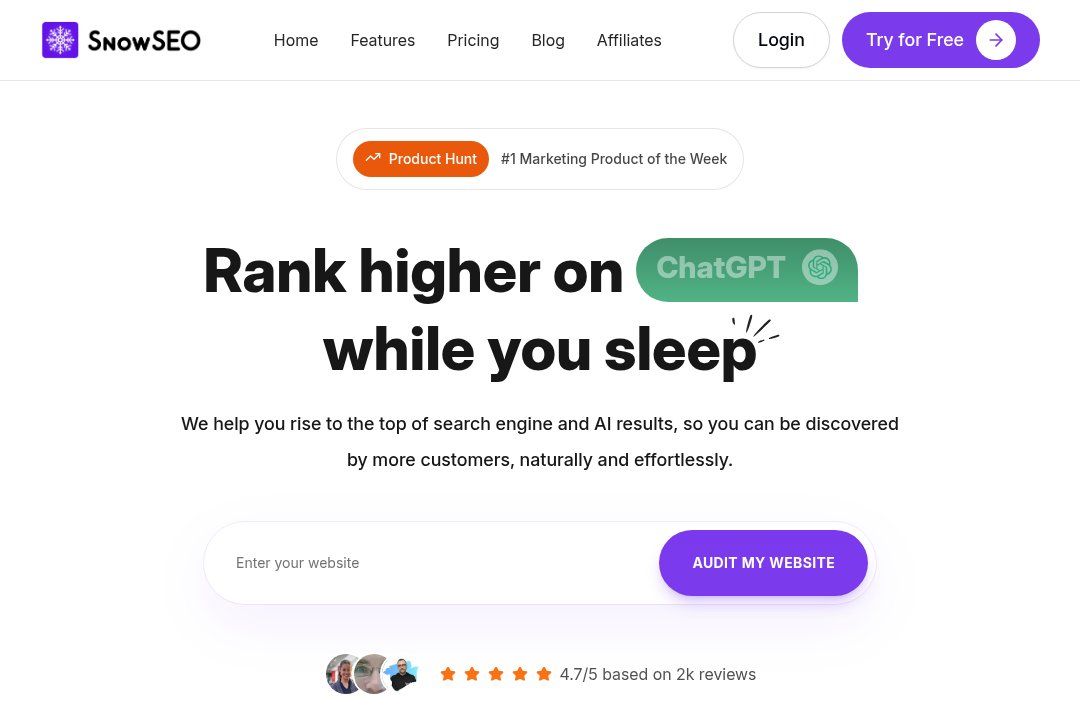
You already know that SEO is moving fast. The real question is whether you want to chase the trends or let them compound for you. Startups win when they act early, so take what you learned here and plug it straight into a system built for speed. This is where SnowSEO steps in. The platform automates the hard parts like keyword research, AI content optimization, and performance tracking, so you stop guessing and start growing. It even tailors every move to your brand and keeps you visible across search engines and AI platforms.
If you want a shortcut to stronger rankings, explore our recommended SEO tools to enhance your startup’s strategy. Then jump into SnowSEO and set up your first optimized content pipeline. Pick a target keyword, generate a page, and watch how fast you can ship work that actually ranks. Take the next step today and turn these new SEO trends into your competitive edge.
Frequently Asked Questions
Q1: What are the latest SEO strategies for startups?
Use intent based content, not keyword stuffing. Search engines now judge how well you solve a problem, not how many times you repeat a phrase. Build pages that answer real user questions. Add clear structure, fast load times, and a strong internal link path. Treat every page like a sales rep that works 24 or 7. If it does not move a reader closer to action, rewrite it.
Q2: How fast can a startup see results from new SEO trends?
Expect early signals in 6 to 8 weeks. Real traction often lands in 4 to 6 months. You speed this up when you publish often and target tight topics. Think of it like running: short steps beat giant leaps. Keep your site clean, keep pages updated, and search engines will reward you faster.
Q3: How does AI search impact keyword planning?
Shift from single keywords to question based clusters. People talk to AI search tools like a friend, so match that tone in your content. Use simple language. Build pages that cover one clear topic from start to finish. Keep answers short and direct. This helps you win both AI summaries and classic search results.
Q4: What mistakes slow down SEO growth for new startups?
Stop chasing broad topics that big brands already own. Ignore vanity metrics like raw traffic. Focus on search intent, technical health, and consistent publishing. Avoid thin pages, weak titles, and slow load times. Clean structure beats clever tricks every time.
Conclusion
Startup life moves fast, so you need to spot shifts in search before they hit you. Trends like AI search and new ranking signals shape how people find young brands today. Work smarter by following insights from ongoing studies such as recent research on language models and search behavior. These shifts show how search engines now lean on deeper context, not just keywords.
Key takeaways stay simple. Stay updated with SEO trends so you do not fall behind. Leverage specialized tools and clear strategies to move faster than bigger players. Learn from successful startups that test small, track gains, and move on what works.
Next steps are clear. Sign up for our newsletter to receive the latest SEO tips and resources.